

By Jean Lotus
When we encourage the use of natural building materials, we often use the terms “low carbon” to describe their benefits. But what does that really mean?
The problem: The construction industry and greenhouse gasses. The international construction industry is one of the largest contributors of planet-warming greenhouse gasses contributing 37% of emissions worldwide, according to a 2023 United Nations report. Additionally, construction waste takes up 30-40% of landfills internationally.
The US Dept. of Energy’s new definition of a zero-emissions building is one that reduces greenhouse gas emissions throughout its lifecycle. This includes emissions from construction, operation, and maintenance.
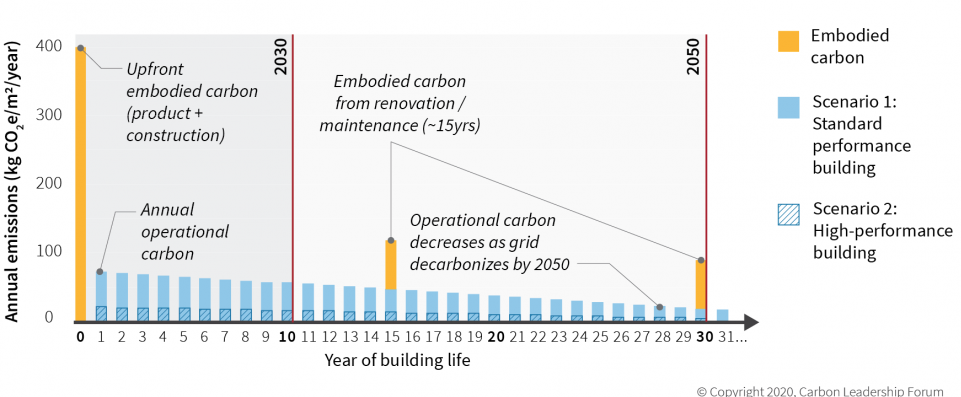
High-performance, energy efficient homes that reduce heating and cooling bills. This is called “operational carbon” and may include using heat pumps, electric water heaters, mini-splits and induction cooktops.
In the building industry, embodied carbon or upfront carbon refers to the sum of all the greenhouse gas emissions (mostly carbon dioxide) resulting from the mining, harvesting, processing, manufacturing, transportation, and installation of building materials. Embodied carbon is often 20-50% of the whole life energy and carbon of a building.

Image courtesy of Carbon Leadership Forum
Some jurisdictions, including the states of California, New York and New Jersey and the city of Vancouver, BC have passed rules for new construction mandating reducing embodied carbon by as much as 45% in new construction. Other states are following suit.
Embodied carbon is determined by a methodology called a Life Cycle Analysis (LCA), which calculates the carbon footprint of a building material. The US Environmental Protection Agency and other groups such as the Carbon Leadership Forum are working on standardizing LCAs for building materials. These are used to create an Environmental Product Declaration (EPD) often compared to a nutritional label for foods, which quantifies the environmental impact of different building materials. EPDs help manufacturers determine the carbon emissions of their products.
 Image courtesy of Carbon Leadership Forum
Natural Building Materials: A good choice for low carbon materials
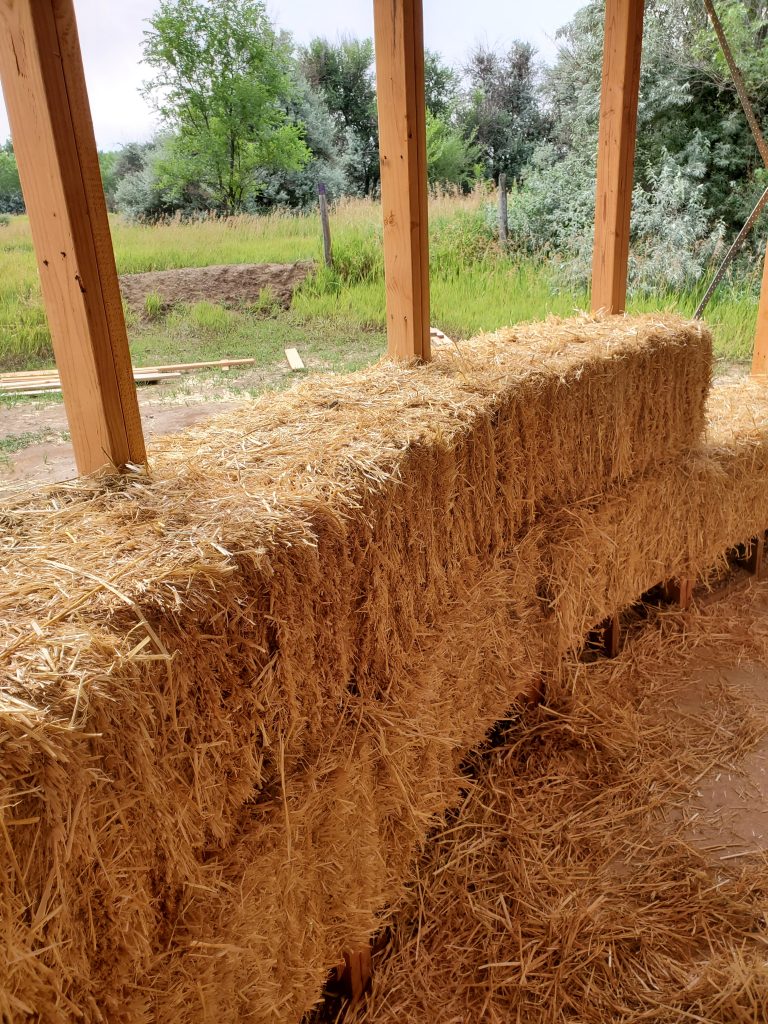
Natural building materials, such as wood, hemp, eelgrass, cork, cob, straw bales, rammed earth, bamboo and stone, can offer a low-carbon alternative to traditional construction materials like concrete; steel; mineral wool and polyurethane foam insulation; and vinyl flooring.
Here’s why natural building materials often have a lower carbon footprint and reduced embodied carbon:
- Reduced Processing: Many natural materials require minimal processing compared to manufactured materials. This means less energy is used in their production.
- Local Sourcing: Natural materials are often sourced locally, reducing transportation emissions.
- Carbon Sequestration: Some natural materials, like wood, straw, cork, hemp or bamboo can sequester carbon dioxide from the atmosphere, helping to offset embodied emissions.
- Durability: Natural materials are often highly durable, reducing the need for frequent repairs and replacements. This can lead to a longer lifespan and lower overall environmental impact.
