Discuss how low embodied carbon material selections and Whole Building Life Cycle Assessment support the resilience of your project.
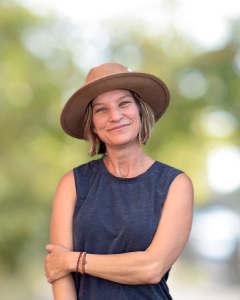
I’ve spent over 20 years in the construction industry in Colorado, specializing in preconstruction services, project planning, and construction management with a focus on green building practices.
As a Certified Passive House Tradesperson and an Ayurveda Health Counselor, I bring a unique perspective to my work. I’m currently pursuing WELL AP, which helps me dive deeper into the connection between our built-environment and wellbeing.
I love exploring how building science intersects with wellness. My goal is to help my clients achieve low carbon, cost effective, and healthy spaces that enhance individual and community wellbeing. I believe in creating environments that not only function beautifully, but also nurture a sense of harmony and health for everyone. I use BEAM Estimator to calculate Embodied Carbon, PHPP for energy modeling, and Athena Impact Estimator for WBLCA, providing the best support for carbon accounting and energy modeling available.
AIA-CEU
This presentation explores both the practical and philosophical connection between climate resilience and incorporating low embodied carbon materials during design, how natural materials can help us build homes that are healthy for the occupant and the climate.
Prerequisite Knowledge:
None Required.
HSW Justification:
This course qualifies for HSW by showing how natural, low embodied carbon materials directly improve occupant health through safer indoor environments while reducing environmental impacts that affect community welfare. Participants will evaluate tools and practices that guide carbon-conscious, resilient design decisions, ensuring buildings perform safely and sustainably over time.
Learning Objective 1:
Evaluate the role that natural materials play in designing resilient buildings.
Learning Objective 2:
Explore the tools used during the design phase that help guide carbon-conscious decisions such as BEAM estimator and WBLCA.
Learning Objective 3:
Discuss ancient design practices that incorporate nature and how modern society has changed the course of natural building.
Learning Objective 4:
Discuss how climate resilience is more than building with nature, it’s also finding resilience in the current political climate and learn new ways in which to support natural builders.