By Jean Lotus
Natural building practices and salvaged/recovered wood are a natural fit. Some natural builders say recovered wood outperforms big-box lumber and doesn’t drive up total project costs.
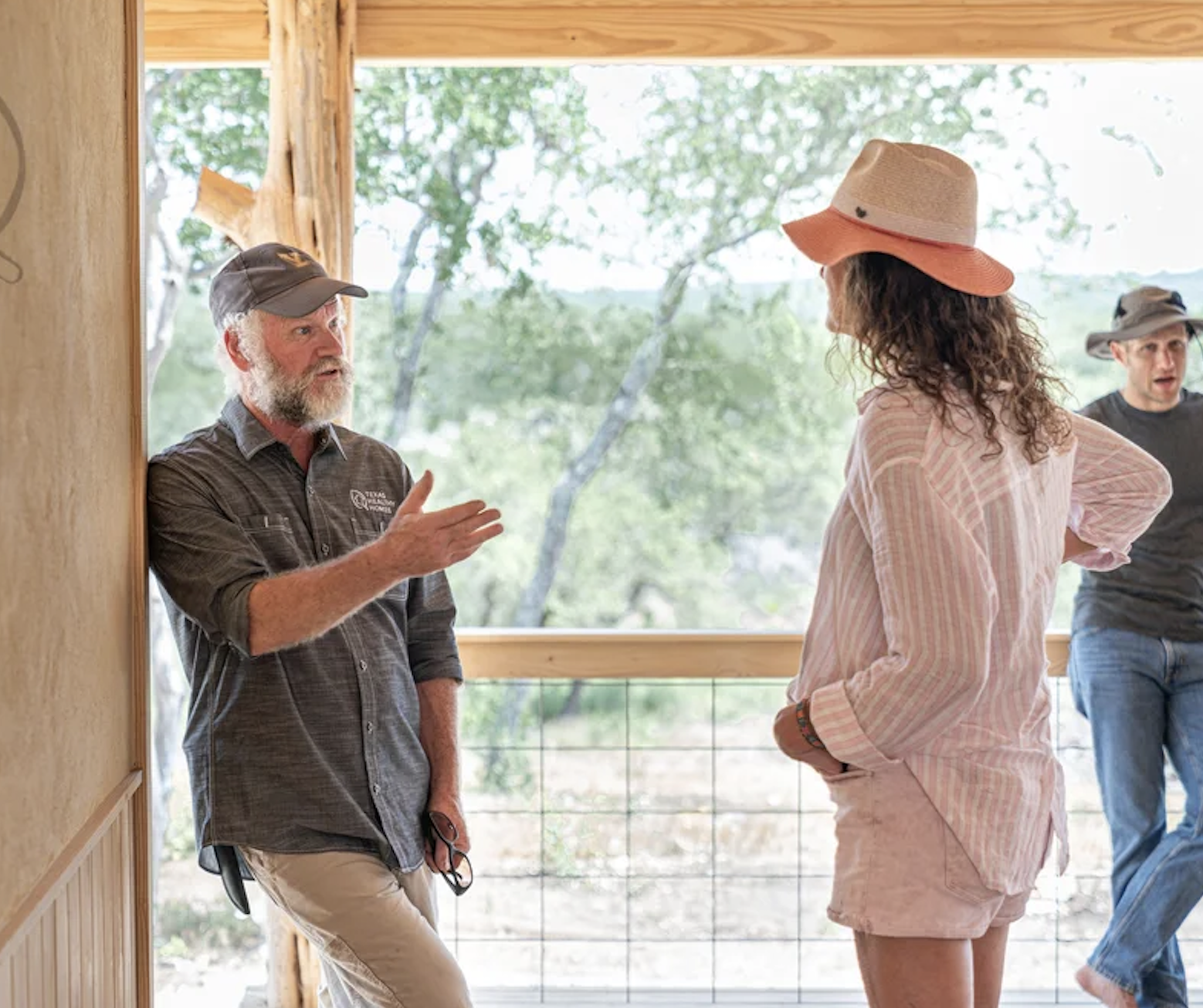
A case-study example is Tim White, founder of Texas Healthy Homes and a national consultant experienced in hempcrete, straw bale, papercrete and adobe. White is a big fan of recovered wood.
A member of Natural Building Alliance, White has used thinned ponderosa pine from Colorado national forests for roof decking in various natural building projects. White’s team integrated rough-sawn lumber into his structures as a direct alternative to industrial sheet goods like plywood or OSB.
White said his goal as a natural builder is to build homes with natural, non petroleum-based materials to show, “you can build homes without drywall, paint or caulk.”
Labor and Material Logistics
White said on projects in rural mountain Colorado, he relied on building roofs with engineered trusses, covered with true rough-sawn, 1X6 boards sourced from local sawmills and thinning operations. White noted that working with these boards was preferable to handling standard 4×8 panels.
Workers preferred the sawmill boards over manufactured goods. “We weren’t saying ‘Oh, my God, I don’t want to see another piece of sheet good,'” White said in an interview, noting that his team still had energy for other tasks at the end of the workday. He reported that crews were also “excited that they weren’t dealing with chemicals like formaldehyde.”
High Performance
Even though these boards weren’t kilned or certified, White argued that the semi-arid climate of the Southwest allows for effective seasoning without industrial kilns. By banding the wood and letting it sit in “20% humidity,” the timber would completely dry, he said.
White maintained that this natural seasoning allows the wood to compete in performance with commercial lumber, which is often left exposed to rain and the elements in retail yards. Structurally, he described the resulting installation as the “strongest roof system I have ever created – way stronger than code minimum.”
Economic and Environmental Impact
White emphasized that sourcing wood from forest thinning operations redirects material that might otherwise be sent to a chipper. He framed the use of small, local mills as an economic driver for rural and remote locations.
“I always go for small mills to try to create local economic development,” White explained, noting that the practice simultaneously promotes a “more healthy forest”.
The transition to natural wood also reduced jobsite waste. Because the material was not treated with industrial glues or resins, any off-cuts became “a piece of firewood instead of trash,” White said.
For White, the decision to use regional, unprocessed timber was aimed at removing toxins from the built environment.
“What it comes down to is a moral decision to use these materials,” he said. “But the total costs ended up comparable when we avoided using sheet goods for roof decking.”
This article also appeared in the Urban Wood Network newsletter