
The only reason we ship raw materials across the planet is that we lack the knowledge to convert local materials into usable substitutes. . . . In short, knowledge is a substitute for both resources and shipping.
— Alvin Toffler, Power Shift
Summary
(This entire post is a longish summary of a much larger paper in development)
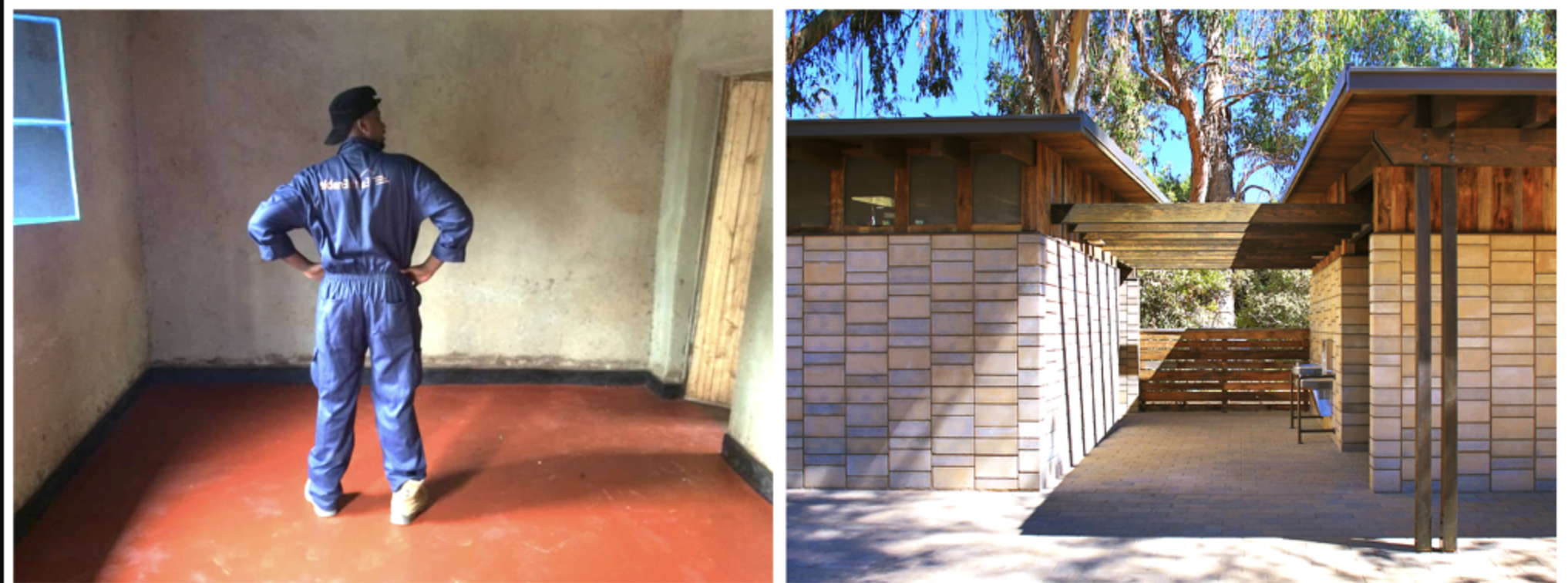
Concrete building and earthen building are the same thing: making larger rocks out of smaller rocks. The differences are simply construction technique and binder.
Now, like two galaxies slowly merging, the ten thousand year old technologies of earthen construction are evolving, improving, and joining with the two hundred year old concrete industry, itself rapidly evolving and adapting to the very new conditions of a new century. Soon enough, there will be no substantial distinction between the two, just a huge and multifaceted family of products that are each and all simply artificial rock—a lot of little rocks bound together into a bigger rock. That’s how you make the Roman Pantheon, the Great Wall of China, Taos Pueblo, and the Sydney Opera House. Or an adobe block or a nuclear containment vessel. That’s concrete.
Earthen architecture, better described here as clay concrete, is rising from the hinterlands and coming to town. In many ways and in many places, earthen building is shedding its “mud huts” poverty stigma, finding ways to be stronger and more durable without the massive emissions of conventional concrete. And, it is so often just plain lovelier to the eye and to the touch than any alternatives; it’s what humanity grew up with.
Meanwhile, the $700 billion global concrete industry needs to reduce its substantial carbon emissions while also responding affordably to increasing market demand. So far, this mostly means finding “plug-and-play” solutions—better binders to replace extremely carbon-intensive Portland cement, the worldwide binder of choice since its invention 200 years ago. But these solutions are inadequate to the challenge, and a wholesale reenvisioning of the industry is both possible and necessary. This will certainly include adopting and incorporating “earthen architecture”—clay concrete in all its many modernized forms.
Imagine an effective construction industry than provides safe, affordable housing (and schools and highways and cities) without loud, smelly trucks roaring around, without huge gashes in the Earth, without a huge and capital-intensive infrastructure, and without cooking the climate. Maybe even concrete absorbing more carbon than it emits. Crazy, right? Crazy sort of like putting a man on the moon, or cheap, reliable smart phones; it was crazy, and then we decided to do it and we did it.
Introduction
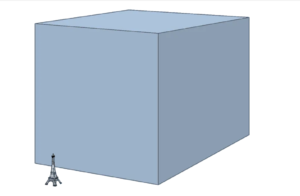
We love concrete, and we make about a cubic mile of it every year to serve hundreds of different purposes, from a new Silk Road across Eurasia to the new water lines in your neighborhood to the foundation under you right now. We’re going to need even more concrete in the years to come as we currently build the equivalent of another New York City every month on Earth. The concrete industry accounts for about 8% of global greenhouse gas emissions, (if it were a country, it would be the third largest emitter after only China and the USA), while historic earthen building systems in their many traditional and modernized forms generate almost no emissions yet fulfill many of the needs for modern concrete. The intent here is to:
1) Point out that both are in the same business of making artificial rock;
2) Outline areas of intersecting needs, strengths, challenges and technologies, and;
3) Start a conversation: How can we meet people’s needs without cooking the climate?
All of this must go forward with an eye on changes growing ever faster in a world that is both our customer base and the environment within which we work, such as:
1) Developments in binders and aggregate supplies/feedstocks;
2) A varied but growing price on carbon emissions (and rewards for storage);
3) A shifting labor market, unique in each locale;
4) Trends towards localization; and
5) The advent of artificial intelligence and robotics